Case Study | Breckenridge Riverwalk Trail of Lights
Lighting as pedestrian placemaking.
A civic lighting strategy designed to activate underused downtown walking areas, improve access, and create a memorable winter route through Breckenridge.
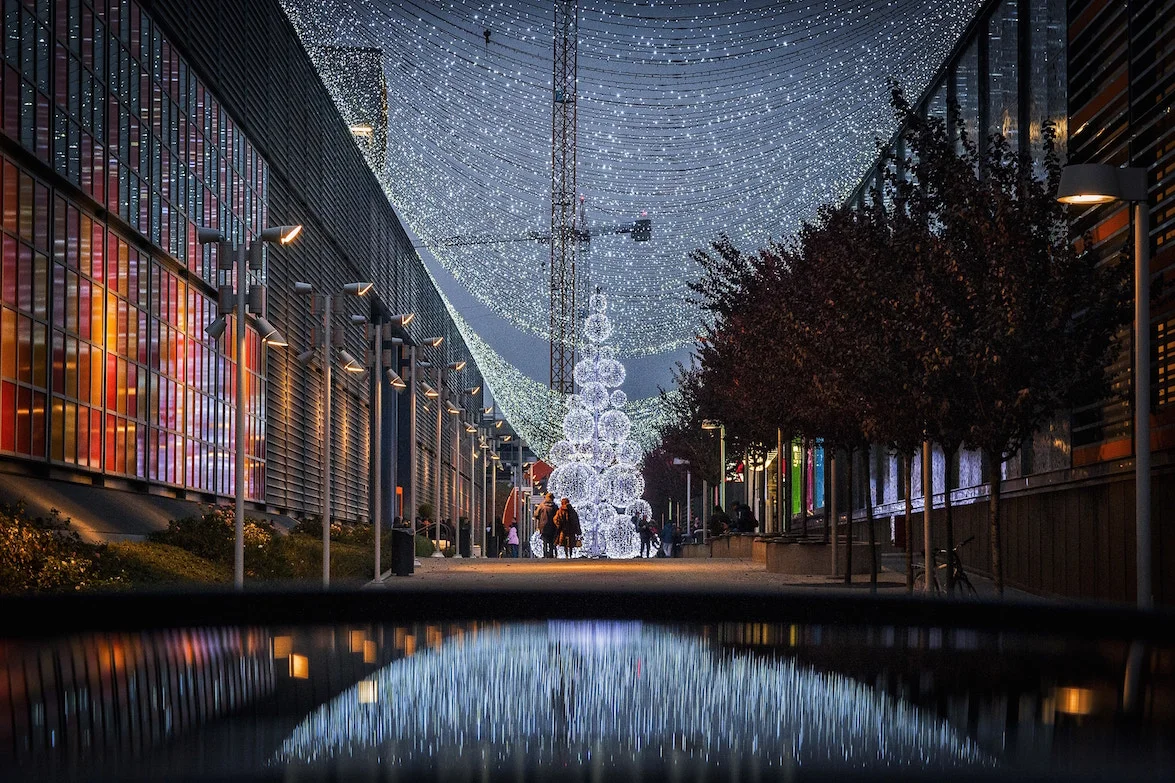
The Riverwalk Trail of Lights shows how holiday lighting can do more than decorate a town. It can help people move, gather, discover, and experience public space differently after dark.
1 mile activated
167 trees
31,750 feet of lights
6 miles of light
Pedestrian access
1 mile
Of underutilized walking areas activated downtown
167
Trees included in the Riverwalk design
31,750
Feet of lights included in the design
6 miles
Of lighting woven through the Riverwalk experience

The Riverwalk design focused on access, movement, visibility, and the feeling of being invited through town.
Project snapshot
A lighting strategy for how people move through downtown.
The Riverwalk Trail of Lights was designed to activate underused pedestrian areas and create more pleasurable access points through illumination. Rather than treating the display as a single destination, the design turned movement itself into part of the experience.
Client type
Town, downtown district, public pedestrian environment
Primary goal
Increase pedestrian access and activate underutilized downtown areas
Design scope
167 trees, 31,750 feet of lights, approximately 6 miles
Public-space focus
Access points, shuttle stops, Blue River Plaza, and downtown flow
The challenge
Underused public space can be hard to see after dark.
The Riverwalk had the potential to become part of the winter downtown experience, but it needed visibility, warmth, continuity, and a reason for people to use it. The project asked how light could make walking areas feel more inviting, connected, and memorable.
01
Make access visible
Pedestrian routes, adjacent access areas, and shuttle connections needed to feel obvious and inviting rather than peripheral.
02
Activate the walking experience
The design needed to turn an underused route into a pleasurable winter path that people would choose to enter and follow.
03
Connect to the town center
The Riverwalk needed to relate to Blue River Plaza, downtown flow, the existing lighting language, and surrounding public spaces.
Map-based strategy
The design was planned around routes, access, and visibility.
The portfolio map identifies illuminated tree areas, adjacent access areas where lights remain visible, red and yellow shuttle-stop markers, and Blue River Plaza as the central star. That is the difference between decoration and placemaking: the lighting plan follows how people actually move.
Riverwalk strategy diagram
Yellow represents illuminated tree areas. Orange represents adjacent access areas. Red and yellow points represent shuttle stops. The star represents Blue River Plaza.
Yellow areas
Tree zones throughout the Riverwalk that were illuminated to create continuity and atmosphere.
Orange areas
Adjacent access areas where lights were visible, helping people find and enter the experience.
Red and yellow dots
Shuttle stops, a key part of making the lighting visible from practical arrival points.
Star
Blue River Plaza, the civic anchor that helped connect the route to the larger downtown experience.
The strategy
Use light to make the route feel intentional.
The Riverwalk design made underused walking areas feel like part of the town’s seasonal identity. The lighting created a visual thread through downtown, connecting trees, pedestrian routes, shuttle stops, access points, and the central plaza.
This is where holiday lighting becomes civic infrastructure. It shapes how people notice, enter, move through, and remember a public space.
Illuminate the path
Create a continuous visual experience so the route feels safe, warm, intentional, and worth walking.
Reveal access points
Make adjacent entry points and surrounding areas visible so people are naturally pulled toward the Riverwalk.
Support arrival
Connect lighting to shuttle stops and public arrival points so the display works with how people actually get downtown.
Match the town language
Use C9 canopy lighting to connect the Riverwalk to the plaza and Highway 9 median design language.
Reduce pressure elsewhere
Create pleasurable access points and walking areas that help distribute movement through downtown.
Design scope
A simple concept executed at meaningful scale.
The Riverwalk design used tree illumination, canopy wrapping, route visibility, and public-space logic to create a cohesive experience across approximately one mile of downtown walking areas.
167 trees
A tree-based lighting program gave the Riverwalk continuity, warmth, and a sense of enclosure.
31,750 feet
The design included 31,750 feet of lights, approximately six miles, across the Riverwalk environment.
C9 canopy lighting
C9 lights were wrapped in the canopy to match the design in the plaza and Highway 9 median.
One-mile activation
Approximately one mile of underused downtown walking areas became a more pleasurable seasonal experience.
Light can turn a path into a place.
Riverwalk Trail of LightsWhy it matters
The best civic lighting changes behavior, not just appearance.
When lighting is designed around movement, it can encourage people to walk farther, explore more of town, use access points differently, and experience overlooked public spaces as part of the seasonal destination.
For Breckenridge, the Riverwalk was not treated as a leftover edge. It became a designed winter route through the civic fabric of downtown.
The execution
A public-space lighting plan requires both design and discipline.
Projects like the Riverwalk require more than a strong concept. They require site logic, power planning, installation coordination, public awareness, maintenance, and attention to how the display performs through the full season.
Site Strategy
Study the walking areas, adjacent access points, shuttle stops, plaza connections, and how the route fits downtown movement.
Route Design
Use light to create a visible, inviting path that feels connected rather than isolated.
Tree and Canopy Plan
Plan tree lighting density, canopy wrapping, C9 placement, and consistency with surrounding town lighting.
Installation
Install at scale in public walking areas while maintaining safety, cleanliness, and a professional civic presence.
Season Service
Maintain the route throughout the season so the public-facing experience remains bright, consistent, and inviting.
Renewal
Remove, store, document, and prepare the Riverwalk program for future seasons, improvements, and expansion.
The result
A walking route became part of the seasonal destination.
The Riverwalk Trail of Lights demonstrates how civic holiday lighting can improve the use of public space while creating the kind of emotional atmosphere people associate with the season.
Activated underused space
Approximately one mile of walking areas became more visible, inviting, and integrated into the downtown experience.
Improved pedestrian access
Access points, shuttle stops, and surrounding routes became part of a more coherent lighting strategy.
Extended the experience
The season was not limited to a single plaza or tree. It moved through a route people could enter and explore.
Modeled civic placemaking
The project shows how holiday lighting can support movement, gathering, tourism, memory, and downtown vitality.


Start planning early
Have a trail, corridor, plaza, or public space that could become part of the season?
Large-scale civic lighting programs work best when design, budgeting, electrical planning, stakeholder coordination, and public access planning begin early. Tell us about the place you want to transform.
